

At 50,000 early users, one lesson stands out: when people search how to record a phone call, they usually do not mean “I want more features.” They mean “I do not want to forget what was said.” That distinction matters, because it explains why searches like capilot, cooilot, co pilot, and even opilot often appear alongside note-taking, call recorder, and voice tools.
AI Note Taker - Call Recorder is a mobile app for iPhone and Android that records calls and voice notes, then turns them into transcripts and summaries for people who need usable records rather than raw audio files. The target users are practical: freelancers confirming project details, small teams reviewing client calls, students saving spoken explanations, recruiters, journalists, support staff, and anyone who ends too many telefon conversations with “wait, what was the number again?”
This is not a victory-lap post. A 50,000-user milestone is useful only if it shows something worth learning. What we saw was less about hype and more about behavior: people want reliable capture, fast playback, searchable notes, and a clear answer to a basic question — how to record a phone call legally and usefully.
The most common user problem was not recording. It was recall.
Many apps in the call recorder category are framed as storage tools. But early usage patterns suggest that storage is only the first step. People rarely come back just to listen to a full 18-minute call again. They come back because they need one specific detail: a date, price, address, commitment, follow-up task, or exact wording from a call.
That shaped how people used the app as both a call recorder and a voice recorder. A phone call after a customer support interaction. A quick voice memo after a meeting. A saved explanation from a parent, landlord, doctor’s office, or contractor. The pattern repeated: the recording mattered, but retrieval mattered more.
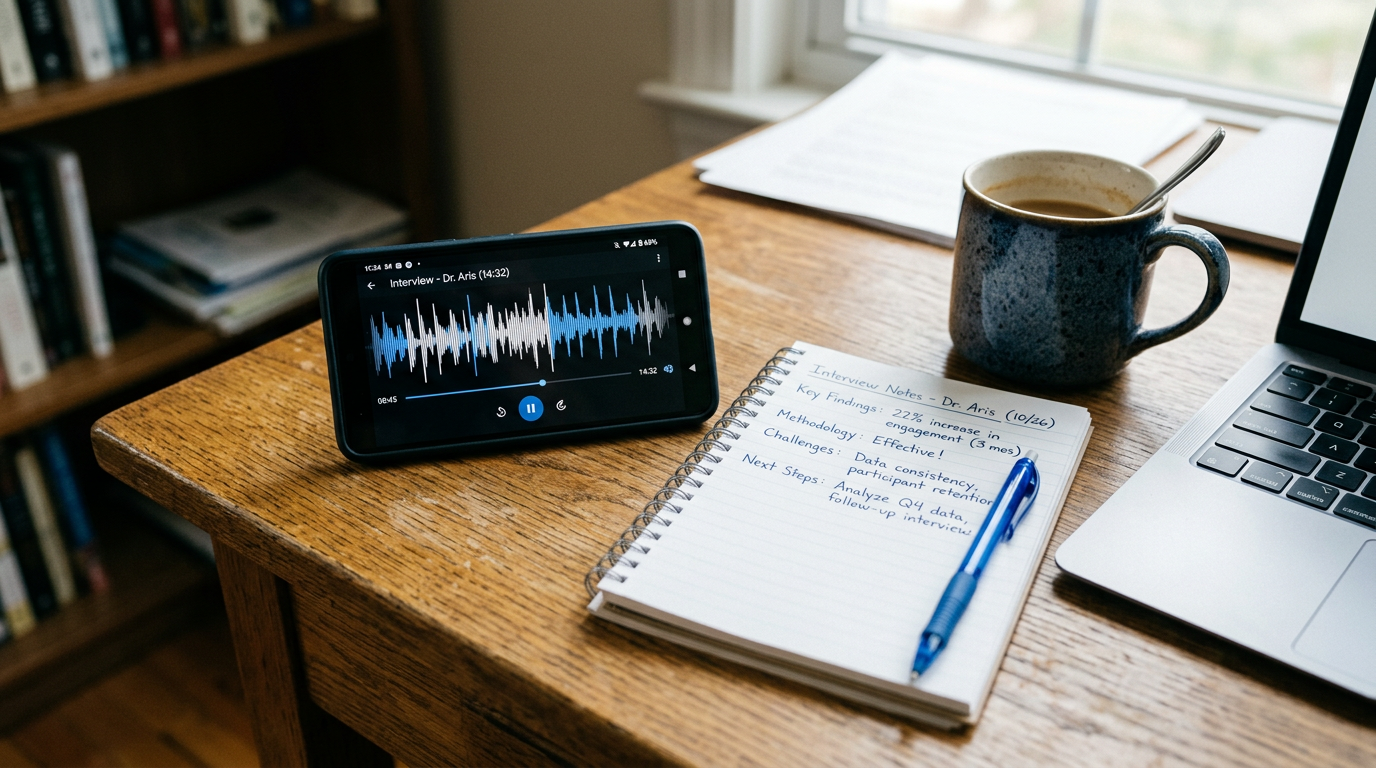
This also explains why users often arrived through messy search intent. Some typed the exact phrase how to record a phone call. Others searched variants related to how to record telephone conversation on iphone, how do i record a phone call on iphone, or how do you record a phone conversation on an iphone. And a noticeable share came through adjacent assistant-style queries — capilot, cooilot, co pilot, opilot — which tells you something important about current user expectations.
Why capilot, cooilot, co pilot, and opilot show up in recorder searches
Misspelled assistant-related searches are not random. They reflect a broader shift in how people think about software. Users increasingly expect a tool to do more than capture information; they expect it to help interpret it. That is where call recording has changed.
A comparative analysis published on LinkedIn described ChatGPT, Copilot, and Gemini as three of the most prominent systems in the market, each associated with a different style of assistance and productivity support. Even when users type capilot by mistake instead of Copilot, the underlying expectation is clear: they want software that behaves more like an assistant than an archive.
That expectation showed up in user feedback. People did not ask only for better call recording. They asked for better outcomes after the call: summaries, next steps, cleaner transcripts, easier export to teams, and less time spent scrubbing audio. In other words, they wanted a recorder that works more like an operator, a co pilot, or even what some searchers call opilot.
There is another clue in public interest trends. The Economic Times’ running coverage of statistics and updates around ChatGPT, Gemini, and related tools reflects how quickly assistant-style software has become part of mainstream tech attention, with updates continuing into 2026 such as OpenAI’s reported plan to bring Sora into ChatGPT to boost engagement. You can see that broader pattern in their coverage here: Economic Times reporting on ChatGPT, capilot, and Gemini-related developments. Even if someone starts with a simple phone recorder need, their benchmark is no longer “does this save audio?” but “does this help me do something with the audio?”
What early user behavior actually rewarded
After looking at early feedback themes, a few selection criteria kept appearing. Not in polished review language — in plain, practical complaints and compliments.
- Speed matters more than depth. Users value getting a usable transcript quickly more than having endless settings.
- Searchability beats long playback. A transcript with keywords is often more useful than a perfect waveform display.
- Call and voice in one place reduces friction. People switch between live calls and spoken reminders constantly.
- Clarity around limitations builds trust. Users appreciate being told when phone, carrier, or device rules affect call recorder behavior.
- Summaries are not decoration. For busy users, a short recap is often the feature that makes the recording usable.
If you are comparing options in this category, these criteria are more useful than brand claims. A generic recorder may save the file. A more complete workflow helps you find the useful part later. That difference matters whether the source is a sales call, a family update, a google voice conversation, or notes after a zoom meeting.
Who benefited most from the first 50,000 users
The clearest fit was not “everyone with a phone.” It was people with repeated information risk: those who regularly need to remember spoken details accurately.
That included:
- freelancers confirming scope, budget, and deadlines on client calls
- small teams documenting phone decisions without building a heavy workflow in microsoft teams or teams-style collaboration tools
- students recording explanations and turning voice into study notes
- journalists and researchers keeping source conversations organized
- customer-facing workers logging details after support or answering service interactions
- families tracking practical information from schools, clinics, or service providers
Who is this not for? If you only need a recorder once a year, never revisit transcripts, or prefer handwritten notes over any digital workflow, a basic built-in option may be enough. Likewise, if your main need is full meeting collaboration inside enterprise platforms, you may care more about dedicated workspace tools than a mobile-first phone and voice recorder.

One unexpected lesson: users compare recorder apps to assistants, not to tape recorders
That may be the biggest shift behind this milestone. People no longer judge a recorder only by whether it captures sound. They judge it against the standard set by assistant tools like google gemini, claude by anthropic, deepseek, meta ai, or a co pilot-style helper: can it reduce mental load?
A 2023 Kozminski Techblog article discussing “Capilot” in Windows 11 noted that the assistant had quickly gained attention after its pre-version release on September 26 and was already being judged for practical usefulness, not novelty alone. That framing is relevant here too. Users adopt support tools fast when they save time in a concrete way, and they drop them just as fast when they create extra steps. The article is here: Capilot AI Assistant in Windows 11: practical usefulness over novelty.
For a call recorder uygulama, that translates into a simple product truth: the recording is the input, not the finish line.
Practical questions users kept asking
“How to record a phone call without turning it into a messy archive?”
Use a workflow that captures the call, labels it clearly, and gives you a transcript or summary right away. Raw audio alone tends to pile up unread and unheard.
“Is this mainly for business calls?”
No. Professional use is common, but many practical use cases are personal: housing calls, school updates, appointments, family logistics, and follow-up voice notes.
“Why do people search capilot, cooilot, or opilot when they want a recorder?”
Because they are often not looking for a recorder in the old sense. They are looking for help after the call — notes, structure, and memory support.
“What should I check before choosing a call recorder?”
Check ease of use, recording reliability on your device, transcript quality, privacy controls, export options, whether it also works as a voice recorder, and whether the pricing makes sense for your actual frequency of use.
What this milestone says about the category
The call recorder category is maturing into something more specific. People do not just want call recording as a technical function. They want a record they can act on. That is why search terms bleed across categories: phone, voice, recorder, teams, nition-like note workflows, and assistant-adjacent terms all sit close together.
It also means the best use case is not “record everything.” It is “record what you are likely to need later.” This sounds obvious, but it changes behavior. Instead of treating recordings as passive archives, users start treating them as decision tools.
If you want that outcome, AI Note Taker - Call Recorder is designed around that practical chain: capture, transcribe, summarize, retrieve. It is not the only way to handle notes from spoken conversations, but it fits users who live on their phone and need something lighter than a full meeting stack.
That broader mobile-app approach is also consistent with how app companies are increasingly building focused utilities instead of bloated all-in-one software. For a wider look at that product mindset, Frontguard’s app portfolio is a useful reference point.
A milestone worth keeping in perspective
Fifty thousand users does not prove perfection. It proves repetition. The same problem kept showing up in enough real situations that people chose to keep a tool for it. The most credible takeaway from that is modest: users have become more selective, and they now expect a call recorder to help them remember, not just record.
That is why odd searches like capilot, cooilot, co pilot, and opilot matter more than they first appear to. They signal a change in user language. People may still ask how to record a phone call, but what they often mean is: how do I keep the important part, find it later, and avoid missing what matters?