
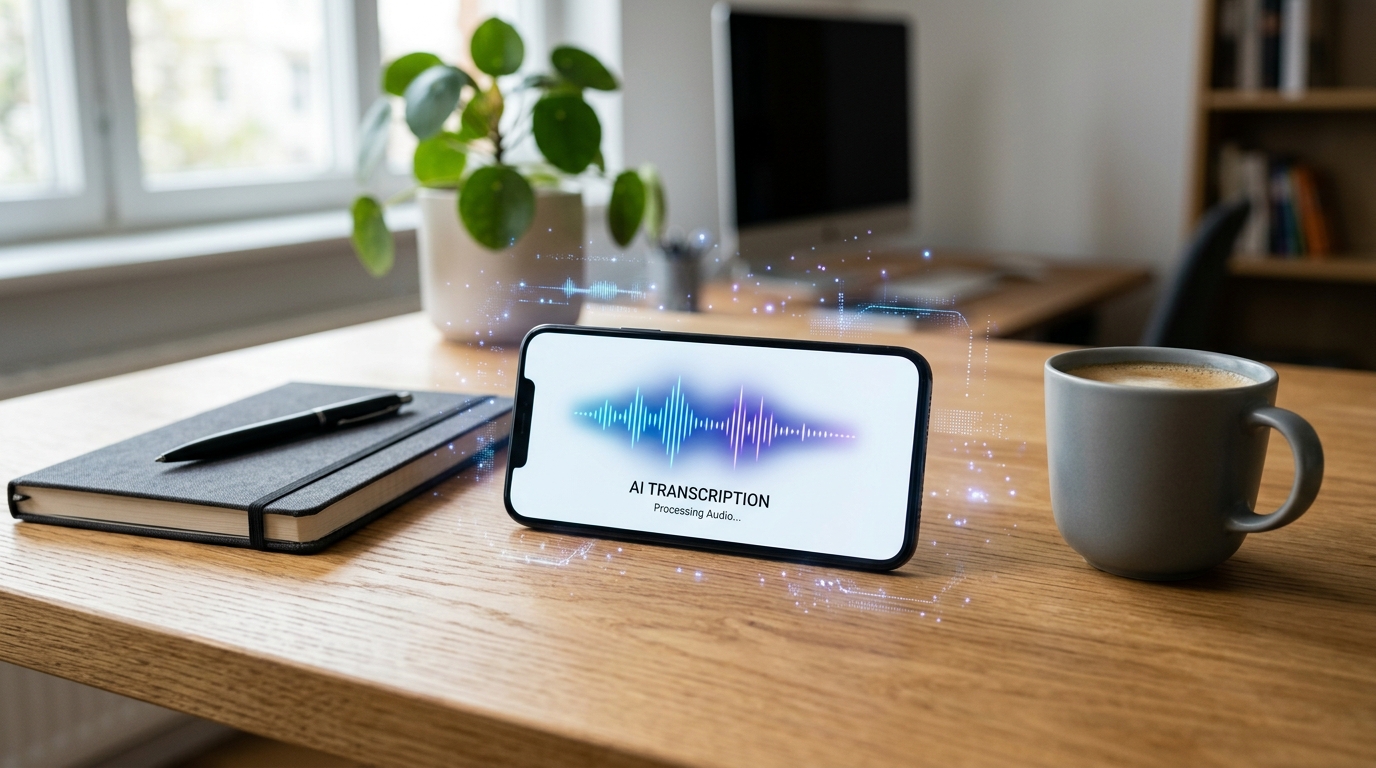
I was recently auditing the digital privacy habits of a mid-sized remote team. One project manager showed me her chaotic desktop setup: a zoom meeting running on her primary monitor, a physical notebook open on her desk, the textnow app for quick client texts, and her smartphone dialer ready to call the comcast customer service number about an intermittent internet outage. When I asked her how she captured the actual details and action items from all these different channels, she sighed and pointed to a fragmented mess of google keep entries, voicemail transcripts, and scattered journal scribbles. She was completely overwhelmed by her own system.
She isn't alone in this frustration. The newly released "Mobile App Trends 2026" report by Adjust provides a fascinating look into exactly why we feel so buried under our own digital tools. According to their data, global app installs grew by 10% last year, and consumer spending hit a massive $167 billion. Yet, despite downloading more productivity apps than ever, our daily workflows are fracturing. In my research, I've found we have reached a point of diminishing returns with manual data entry.
Why are traditional audio workflows breaking down?
To understand the breakdown, we have to look at global app store search behavior and user retention. A professional searching for how to record a phone call on android is hitting the exact same wall as a user looking for a dedicated call recording app. They don't just want a basic recorder that outputs a generic audio file. They want a system functioning intelligently—as a complete, searchable assistant.
We used to accept raw audio. You would hit record, save the file, and promise yourself you would listen to it later. You never did. The 2026 industry analysts industry analysis notes a brutal reality for app developers: 70% of users will delete an application on the very first use if it feels slow or requires manual effort. If an app captures your voice but forces you to manually type out the summary into a separate notepad, it has failed the modern speed test. People are tired of managing a separate onenote, one note, keep, and various notebooks just to remember what was said on a thirty-minute client sync.

How is artificial intelligence reshaping our mobile infrastructure?
The Adjust 2026 report points out a critical transition: artificial intelligence has officially moved from being a strategic add-on to becoming foundational mobile infrastructure. We see this heavily in the transcription space. It is no longer enough to just capture sound; the software must understand context.
We are seeing rapid adoption of advanced models like claude by anthropic and fast processors like turbo ai for text generation, but these models are only as good as the data fed into them. You need an integrated capture mechanism at the source. As industry analysis regarding app retention data suggests, users no longer tolerate raw audio files. They expect a unified phone call and meeting capture tool that delivers an immediate, readable summary.
This is precisely where Call Recorder - AI Note Taker fits into the modern workflow. It acts as both a call recorder and an environmental voice capture tool, providing AI-powered transcription natively on your device. Instead of bouncing between a call app, a transcription website, and a separate text editor, the entire process happens in one place.
Where do privacy and security fit into modern capture?
As a digital security researcher, I look closely at how these platforms handle our most sensitive conversations. The Adjust report notes that iOS App Tracking Transparency (ATT) opt-in rates rose to 38% in early 2026. Users are becoming significantly more protective of their data. When you use a generic answering service, or export sensitive audio to external tools like manus, pingo ai, or otterai, you must ask where that data lives.
While platforms like otter ai (or simply otter) are incredibly powerful for large enterprise knowledge bases, everyday mobile users—freelancers, small business owners, and students—need localized control over their recordings. From a privacy perspective, you do not want your private consultations sitting on a poorly secured cloud server just because you needed a quick transcript.
The safest approach is minimizing your tool stack. Every time you transfer data from your mobile device to an external transcription service, you create a potential security vulnerability. Consolidating your recording and transcription into a single, privacy-focused application reduces your digital footprint and keeps your data closer to the source.
What happens when we finally consolidate our tools?
Consolidation is the primary theme of 2026. The era of "an app for everything" is over. Users want fewer, smarter tools. For example, location sharing apps like Find: Family Location Tracker succeeded because they automated check-ins entirely in the background, requiring zero manual input from the user. Voice capture is undergoing the exact same transition.
If you are trying to manage your schedule, you shouldn't need a separate workflow for your mobile calls and your desktop meetings. Whether you are dialing in from google voice or waiting on a zoom join meeting screen, the output should end up in the same searchable format.
How do you evaluate a modern voice capture tool?
When selecting a tool to replace your scattered digital notes, consider these specific criteria:
- Speed to text: Does the app immediately transcribe the conversation, or do you have to wait for an email with a file attachment?
- Dual functionality: Can the application handle both standard mobile calls and in-person room recordings natively?
- Data consolidation: Does it eliminate the need for third-party text editors, allowing you to search past conversations directly within the app?
- Security protocols: Is your data processed securely without being sold to third-party data brokers?
If you want a system that captures spoken agreements without the manual data entry, Call Recorder - AI Note Taker's automated transcription feature is designed specifically for that outcome. It bridges the gap between raw conversation and organized, searchable text.
What is the actionable takeaway for your daily routine?
The data from 2026 is unambiguous: we are spending more on mobile applications, but we have less patience for tools that demand our manual labor. Stop trying to transcribe your own life. Let the software do the heavy lifting. By migrating away from outdated notepads and embracing unified transcription platforms, you reclaim hours of lost productivity while securing your most critical conversational data.