
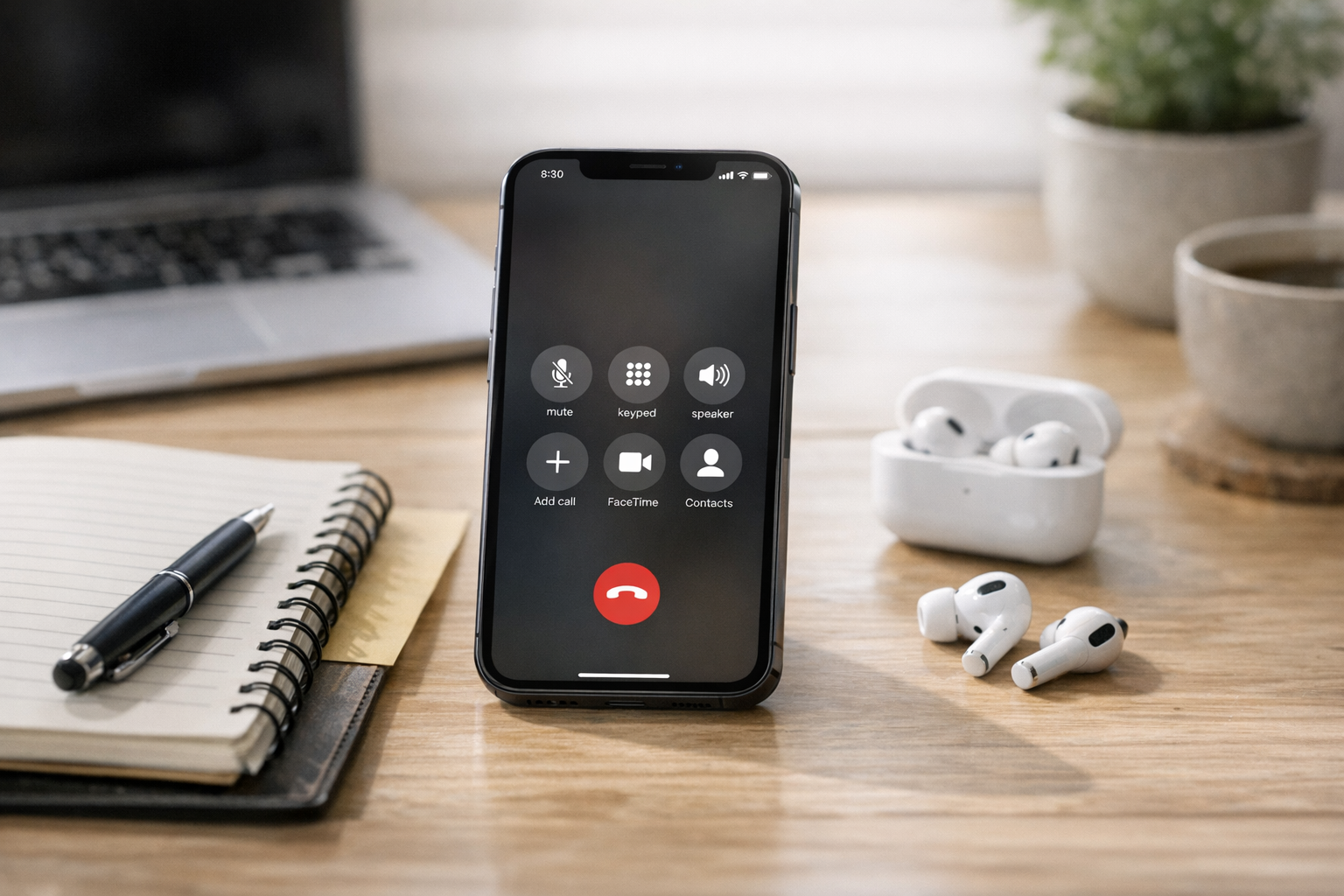
If you have ever finished an important call and immediately forgotten a date, address, quote, or next step, you already understand the problem this kind of app is built to solve. People search for phrases like how do you record a phone conversation on an iPhone, how to record iPhone call, how do I record a phone call on iPhone, and how to record telephone conversation on iPhone because the default phone experience is not designed for keeping a reliable record. That becomes frustrating when the call is tied to work, family logistics, customer support, journalism, remote collaboration, or anything else where details matter.
AI Note Taker - Call Recorder is built for that gap. At its core, it is a call recorder and voice recorder app that helps you keep track of spoken information. Instead of relying only on memory or scattered notes in one note, notebook pages, or messaging apps, it gives you a way to save conversations, review them later, and turn raw audio into something usable. For many people, that means fewer missed details after a phone call. For others, it means making long discussions easier to search, summarize, and organize.
This is not just about pressing record on a phone call. It is about what happens after the call too. A recording can help when you need to confirm what was said, revisit instructions, or create written notes from spoken discussion. If you have ever moved between a phone call, a microsoft teams chat, a teams meeting, a zoom meeting, or a follow-up email and lost the thread, you know how easily information slips away.
The core problem this app solves
The biggest issue is simple: phone conversations disappear as soon as they end. A call may include names, prices, deadlines, troubleshooting steps, interview answers, legal disclaimers, or personal commitments. But unless you write everything down perfectly in real time, the details start fading fast.
That creates a few common problems:
- Memory gaps: You remember the general idea of the call but not the exact wording or action items.
- Note-taking stress: You try to write while listening, which means you do both poorly.
- Follow-up mistakes: Missed numbers, wrong dates, and incomplete next steps lead to confusion.
- No searchable record: Audio alone is useful, but audio plus transcription is far more practical.
That is where an app like AI Note Taker - Call Recorder becomes useful. It is designed as both a call recorder and a voice recorder, so it covers more than standard phone calls. You can also use it as a voice capture tool for spoken reminders, meeting recaps, and quick notes when typing is inconvenient.
This workflow starts with the spoken conversation. Confirm the recording method supported on your phone, obtain any required consent, then review the saved audio and transcript before using them for notes or decisions.
Who AI Note Taker - Call Recorder is for
This kind of app is not only for one profession. It fits anyone whose important information arrives by voice rather than text.
1. Busy professionals
Sales calls, client calls, service calls, recruiter calls, and internal check-ins often move quickly. If you spend your day jumping between call, email, and microsoft teams messages, having a record of what was actually said can reduce confusion later.
2. Freelancers and consultants
Freelancers often receive project scope changes verbally. A recorded conversation helps when a client explains revisions, budget limits, delivery timelines, or technical requests.
3. Students and researchers
If you conduct interviews, collect spoken feedback, or record verbal explanations, a voice-first workflow saves time. Instead of copying everything into a notebook after the fact, you can return to the source material.
4. Journalists and content teams
Interview calls and source conversations are easier to work with when you have both the recording and a written version to review.
5. Families and caregivers
Medical instructions, school updates, travel coordination, and household planning often happen over the phone. A clear record can be genuinely helpful, especially when multiple people need the same information.
6. Anyone dealing with customer support
Calls with an answering service, utilities, delivery companies, banks, or subscription providers can include case numbers, promised actions, and policy explanations. The same applies when you are calling a provider like a comcast customer service number and want to keep track of what you were told.
Why people search “how do I record a phone call on iPhone” in the first place
When people ask how do I record a phone call on iPhone, they are usually not asking out of curiosity. They have a specific pain point. They want to remember a conversation, document something important, or avoid taking frantic notes while listening.
iPhone users often assume this will be a built-in feature, but the experience is more limited than expected. That is why a dedicated recorder app matters. It gives structure to something the standard phone app does not handle well on its own.
It is also worth noting that call recording rules vary by location. Before you record a phone conversation, make sure you understand the consent requirements where you live and where the other participant is located. In many cases, the practical and respectful approach is simply to let the other person know the call is being recorded.
Practical first-use scenarios
If you are new to this category, it helps to picture how the app fits into ordinary life. Here are a few realistic first-use situations.
Job interview screening call
A recruiter phones unexpectedly and starts sharing role details, salary range, hiring stages, and availability expectations. You are walking, commuting, or between tasks. Instead of trying to memorize everything, you keep a record and review the conversation later before your next round.
Client discovery call
A client outlines what they want, mentions examples, adds a few constraints, and casually changes part of the timeline. Those details are easy to miss in the moment. A recording helps you turn the discussion into a clearer project brief.
Customer support conversation
You call a support line, get transferred twice, receive troubleshooting steps, and are told a refund or service credit may be applied. Later, if details conflict, having your own record is useful for checking what was said.
Family logistics call
A relative calls with flight details, appointment times, pickup instructions, or address information. These are exactly the kinds of details people forget five minutes later.
Voice memo as a second use case
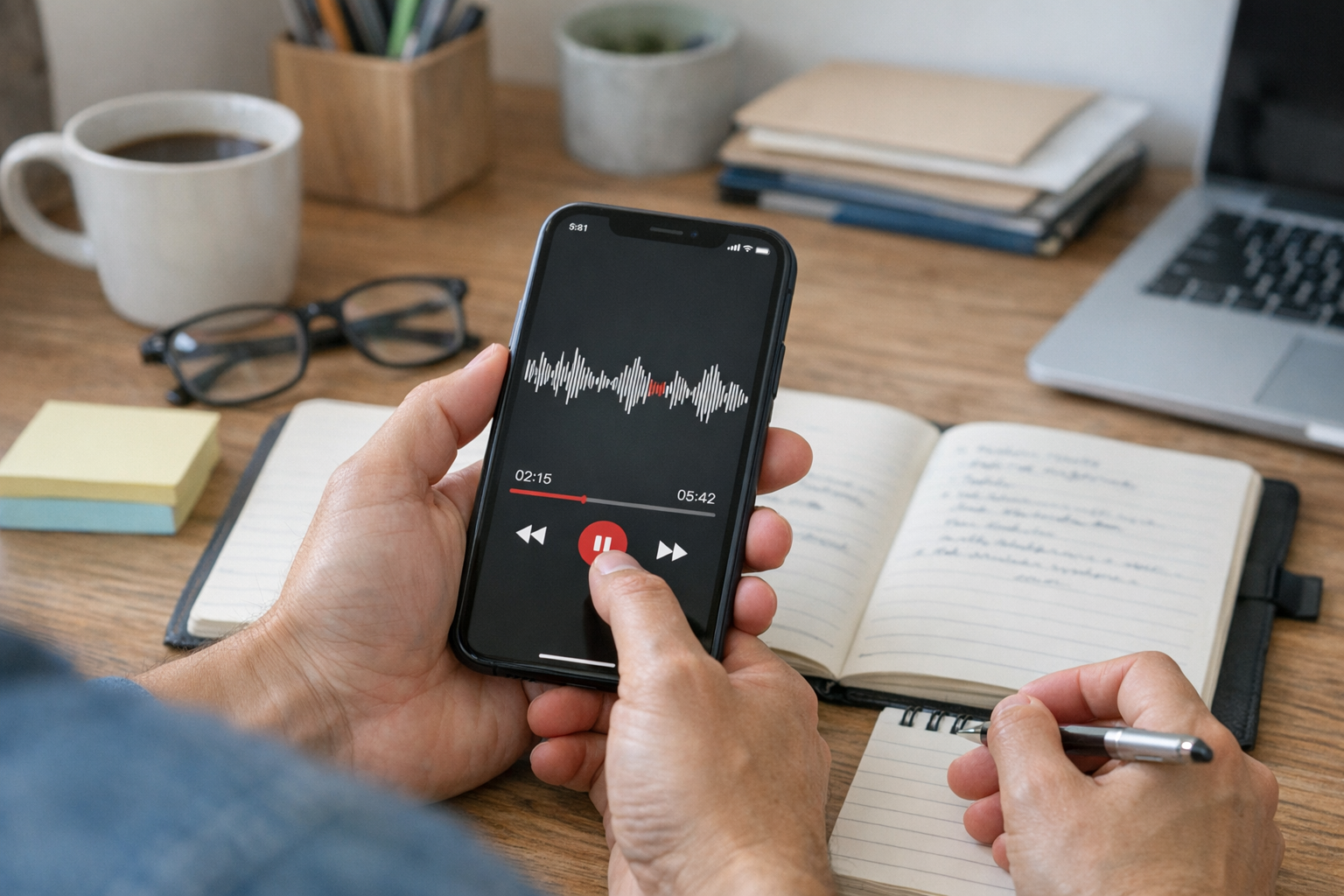
Not every important thought arrives through a phone call. Sometimes you just need a voice recorder as a fast capture tool. You might use it after a teams or zoom join meeting to speak your own summary while the discussion is still fresh.
What first use should feel like
A good first experience with a call recorder should feel simple, not technical. Most users are looking for three outcomes:
- Capture: save the conversation without scrambling
- Understand: review what was said in a usable format
- Act: extract next steps, decisions, and important facts
That is why transcription and summarization matter. A long voice file is helpful, but it still takes time to revisit. When spoken content becomes readable notes, the app becomes more practical in daily work. It starts to function less like a simple recorder and more like a working memory tool.
Some users think of this kind of assistance the same way they think about assistant-style helpers: not as a replacement for judgment, but as support for organization. The benefit is not that the app magically does everything for you. The benefit is that it reduces friction between hearing something important and actually using that information later.
How this differs from random note-taking habits
Without a dedicated system, most people rely on a mix of memory, scraps of paper, messages to themselves, or half-finished notes stored across apps. One detail goes into one note, another into email drafts, and another into a notebook. That works until it does not.
A focused recorder app creates a more reliable chain: the call happens, the audio is saved, the conversation can be reviewed, and the spoken material can be turned into something clearer. That is especially useful if you regularly switch between phone calls, voice notes, microsoft teams discussions, and meeting platforms.
If your broader workflow already includes digital tools, you may also be interested in related utility apps built by teams in the same app ecosystem, such as a category-based assistant app for everyday task support or a second phone number app for separate personal and work calling. They are useful in different scenarios, but the common thread is reducing communication clutter.
A practical way to think about AI Note Taker - Call Recorder
If you are searching how to record a phone conversation on iPhone, the real need is usually not the recording itself. The real need is confidence. Confidence that you will not lose the details. Confidence that you can revisit the exact conversation. Confidence that spoken information can become something structured enough to use later.
That is the role AI Note Taker - Call Recorder fills. It is for people who handle important information by voice and want a cleaner way to capture, review, and organize it. Whether the first use is a job call, a client discussion, a support call, or a personal reminder, the value is immediate: fewer missed details, less note-taking pressure, and a better record of what actually happened.
For many users, that is the whole reason they start searching terms like how to record iPhone call or how to record a phone call. They are not looking for novelty. They are looking for a dependable way to keep up with real conversations.
For the related workflow and its limits, read: How to Record a Phone Call on iPhone: Safe Ways, Limits, and AI Call Notes.