
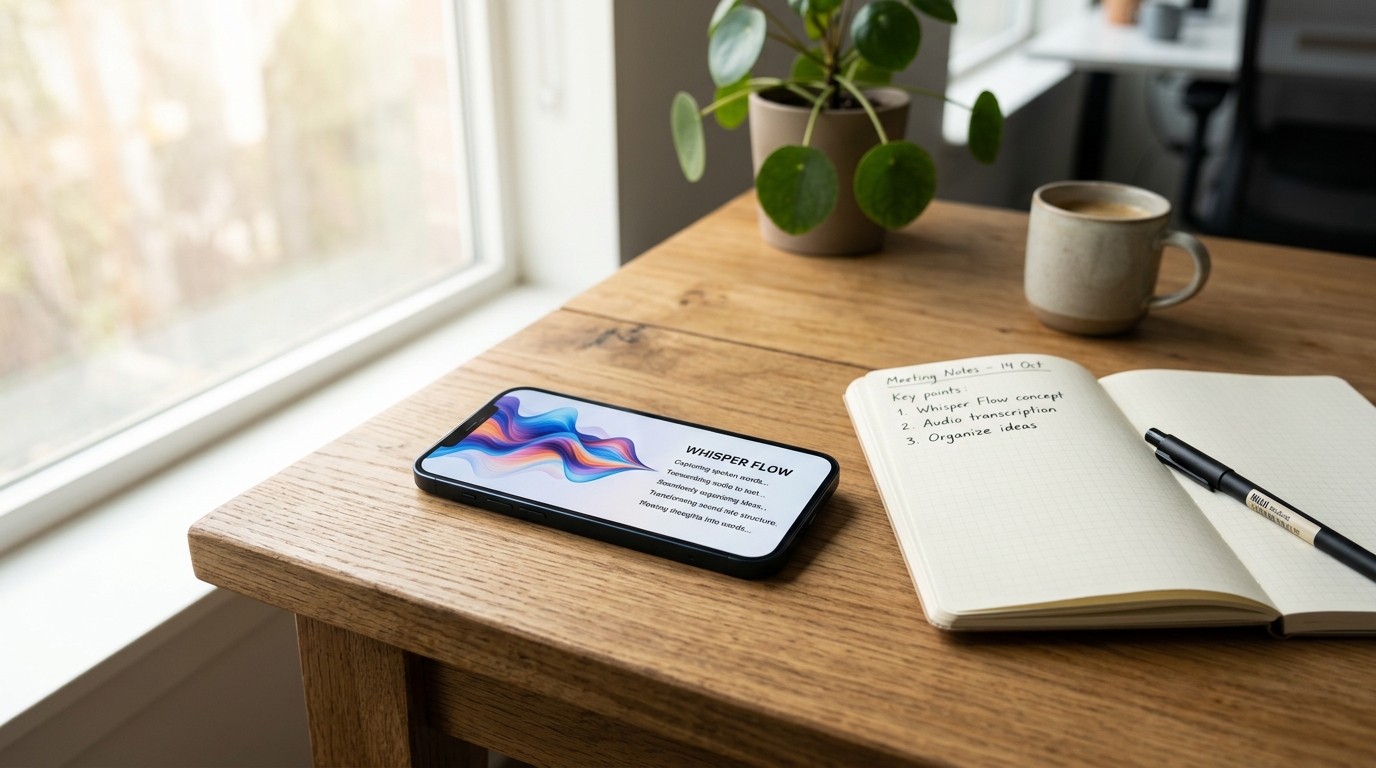
Capturing and processing voice data efficiently requires more than just hitting a button; it demands an intelligent system that instantly converts spoken words into organized text. The new whisper flow technology integrated into modern voice tools does exactly this, allowing a standard recording app for iphone free of manual transcription burdens to silently format your thoughts and calls in real time. Back in 2022, I remember sitting in a loud café, trying to review a raw transcript from an important client call. The traditional capture device I used caught every single background clatter, overlapping sentence, and long pause. The resulting text was essentially unreadable. That deep frustration as a product developer became the catalyst for rethinking how we actually process and organize audio in our everyday workflows.
Why does voice capture still feel broken?
For decades, the standard approach to capturing audio was purely mechanical. You pressed a button, spoke into a microphone, and ended up with a massive audio file sitting quietly in a digital folder. When you needed to retrieve a specific detail, you had to scrub through timelines, guessing where that one crucial piece of information might be hidden. Even as smartphones became incredibly advanced, the core experience of using a voice tool rarely changed. People began to realize that capturing the sound was only ten percent of the job; making sense of that sound was the real challenge. Relying on a basic notepad or a scattered journal to manually jot down points while listening to playback creates immense friction. Users often try to string together disparate tools, perhaps dumping raw text into google keep or one note, but they inevitably lose the context of the original conversation.
How do market trends reflect the shift away from basic hardware?
As a developer, I frequently look at macro industry trends to understand exactly where user behavior is heading. The desire to capture reality is growing exponentially, but the hardware alone is no longer enough. According to a recent global market report by The Business Research Company, the digital voice recorder market is expected to grow from $1.94 billion in 2025 to $2.15 billion in 2026, representing a compound annual growth rate (CAGR) of 10.5%. By 2030, this specific sector is projected to reach $3.18 billion. Similarly, the network video recorder industry is booming, with projections showing a massive $56.11 billion market size by 2025. What these numbers reveal is an undeniable global demand for capturing important moments, meetings, and calls. However, while people continue to invest in hardware, the bottleneck has entirely shifted to the software layer. Having terabytes of recorded audio is useless if you cannot extract the meaning instantly.
What exactly is whisper flow?
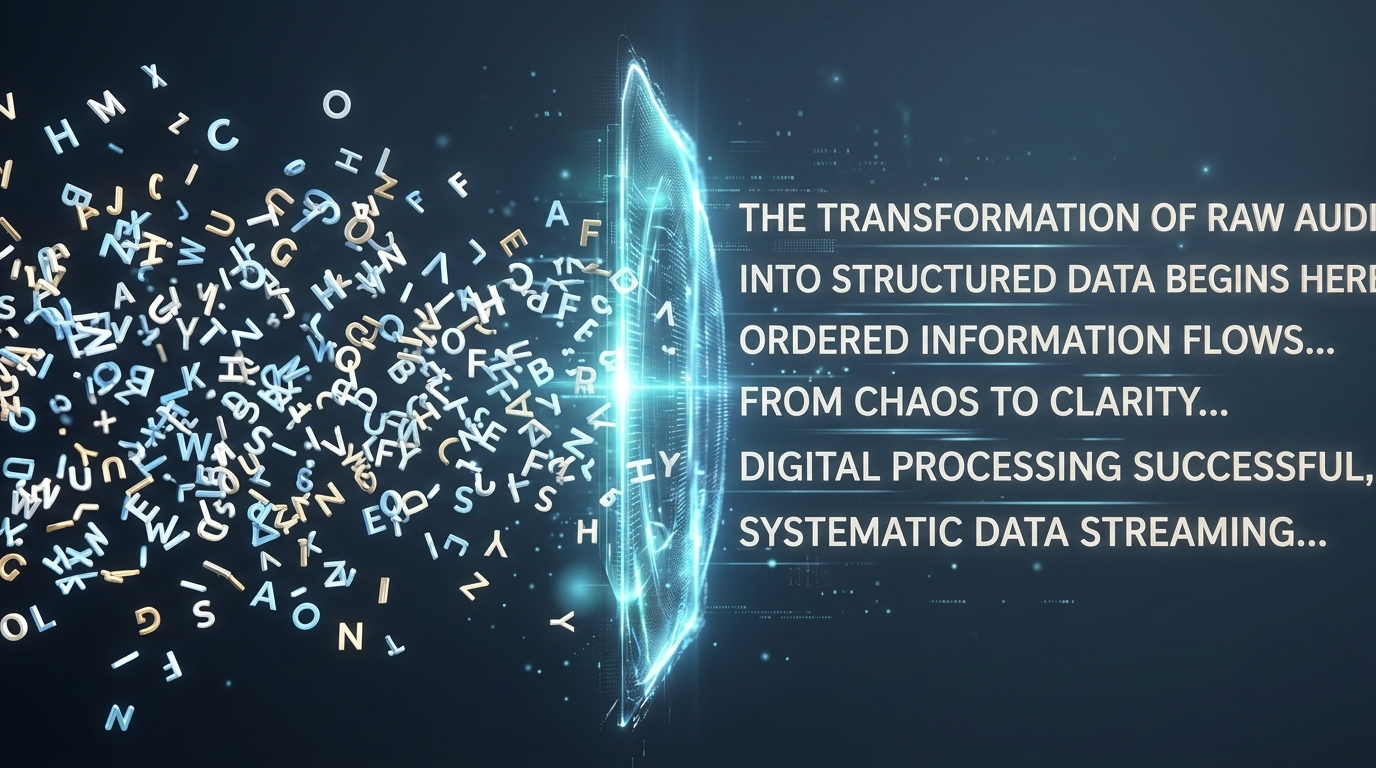
The concept of an intelligent audio stream addresses this exact software bottleneck by completely reimagining the pipeline between spoken words and written summaries. Instead of treating audio processing as a slow, post-call chore, this technology acts as a continuous, intelligent stream that processes your voice data the moment it is captured. When you speak, the system does not just transcribe; it analyzes intent, filters out the ambient noise, and begins structuring the text logically. In the context of AI Note Taker - Call Recorder, this means that the moment you end a conversation, the complex processing is already done. The transition from a messy voicemail or a chaotic group discussion to a clean, readable document happens without any manual intervention. This innovation bridges the gap between raw data collection and actual human comprehension, turning a passive utility into an active participant in your workflow.
How does this improve your daily communication?
The practical applications of this technology become obvious the moment you apply it to stressful or detail-oriented scenarios. Imagine you are dialing a comcast customer service number to dispute a complicated billing error. These calls are notoriously long, filled with hold music, transfers, and specific reference numbers that are easy to forget. Trying to write down those details while holding the phone is a recipe for mistakes. By utilizing a system equipped with advanced transcription logic, you capture the exact phrasing of the representative, the timeline of the dispute, and the promised resolution. The same applies when dealing with an answering service for your business, or when you are trying to catch every detail during a complex zoom meeting. Even if you are just dialing in via a zoom join meeting link on your commute, or using secondary numbers through a textnow app or google voice, having an intelligent capture method ensures that no critical information is missed.
Who actually benefits from an intelligent phone workflow?
This approach to voice processing is explicitly designed for professionals who rely on accurate information but simply do not have the time to do administrative work. Freelancers negotiating project scopes, researchers conducting field interviews, and small teams responsible for taking detailed minutes all find immense value in skipping the transcription phase. It is a workflow built for people who want outcomes, not more chores. Conversely, this is not for someone who simply wants to save a brief, disposable audio clip to send to a friend. The true value unlocks when the stakes of the conversation are high. Building global utility apps at Frontguard has taught us that this need crosses all borders. We constantly monitor international search behaviors, seeing users actively looking for a reliable phone call capture method, or searching for an application that functions smoothly as a highly reliable, functioning recorder. Whether someone types in a search for phone recording methods in their native language or looks for a standard phone capture tool, their core desire is exactly the same: they want an effortless way to preserve and organize their reality.
When is it time to switch your capture workflow?
You know it is time to upgrade your approach when you spend more time managing your notes than actually acting on them. If your current method involves bouncing between otter, a physical notebook, onenote, and claude by anthropic just to make sense of a single client call, your workflow is broken. We see users constantly trying to figure out how to record telephone conversation on iphone devices, or searching for how to record a phone call on android, only to end up with a folder full of unlabeled files. When you rely on fragmented tools like pingo ai, manus, otterai, or turbo ai without a centralized hub, the cognitive load is simply too high. I have previously discussed the ongoing shift away from fragmented tools, detailing why passive recording is failing modern professionals. The introduction of intelligent capture into tools like AI Note Taker - Call Recorder represents the end of that fragmentation. It allows you to focus entirely on the conversation happening right in front of you, confident that the system is silently turning your spoken words into the exact structural format you need for the work ahead.