
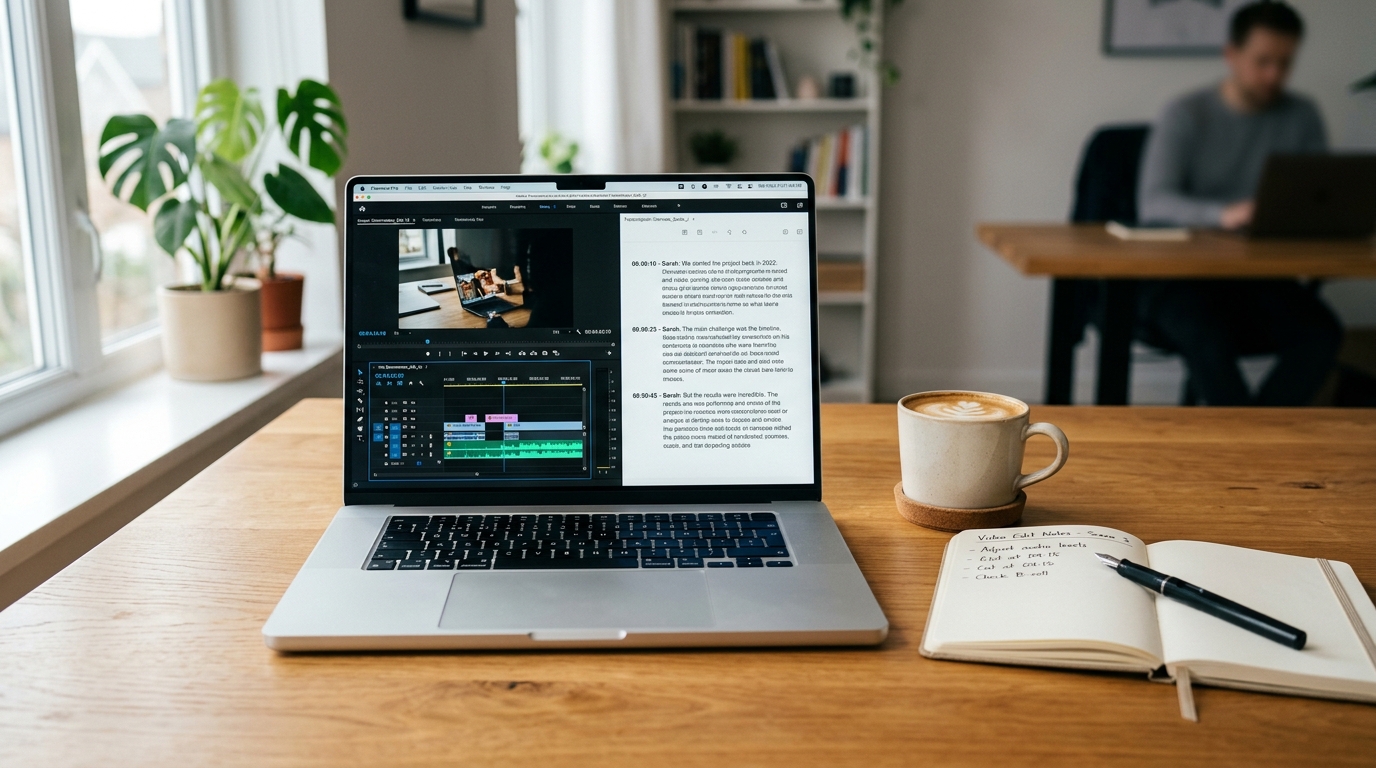
Videos with subtitles achieve a 91% completion rate compared to just 66% without them, according to data from Sonix. When you combine that reality with the fact that the global automated transcription market is projected to surge to $19.2 billion by 2034, one operational reality is clear: raw audio and video formats are no longer enough. The modern standard requires instant text conversion. Whether you need to extract information from social video platforms for research or you are trying to figure out how to record telephone conversation on iPhone devices for client interviews, the logic is simple. If your spoken data isn't searchable, it is effectively lost.
Manual transcription creates a severe productivity bottleneck
For years, professionals treated audio capture and text documentation as two separate chores. You would join a long meeting, take mental notes, and later try to recall the key details in a physical journal. Industry data shows that traditional manual transcription requires four to six hours to process just one hour of audio. In the fast-paced world of mobile growth, that is a significant waste of resources.
By contrast, automated solutions process data at three to five times real-time speed. Organizations that switch to these methods report up to a 70% reduction in costs. As I often tell developers, speed matters just as much as your feature set. Reclaiming those lost hours allows you to focus on strategy rather than clerical work. If you are spending hours typing out a recorded conversation, you are falling behind competitors who automate the process.
How YouTube transcription accelerates market research
Content creators and marketers consume massive amounts of video data daily. Attempting to watch hours of video to extract a few quotes is highly inefficient. When you transcribe from YouTube directly, you instantly convert dense video content into scannable, searchable documents.
I see users regularly attempting clumsy workarounds. They will play a video on their laptop and hold a mobile voice recorder up to the speaker. This multi-step process introduces errors and degrades the source audio. A direct approach to YouTube audio-to-text conversion ensures you get clean text, allowing you to pull exact quotes, analyze keyword density, and generate immediate summaries without the technical friction.
Mobile call capture requires native system integration
While pulling text from a web video is largely a desktop workflow, capturing organic phone conversations introduces different technical hurdles. Reaching 50,000 early users revealed fascinating patterns in how people search for these solutions, as my colleague Emre Yıldırım detailed in a recent piece about user search behaviors and how to record a phone call. Users are clearly frustrated by native mobile limitations.
Whether someone is searching for how to record a phone call on android or trying to route calls through an answering service, the underlying intent is the same: they need a permanent record. This is where specialized mobile tools become critical. If you want reliable, automated capture and summaries of your mobile conversations, AI Note Taker - Call Recorder's transcription feature is designed exactly for that. It bridges the gap between a standard phone dialer and an intelligent documentation system.
Generic note apps fail at processing large audio files
There is a persistent habit among users to dump everything into a single, generic workspace. While a basic notebook app is fine for grocery lists, it falls apart when handling complex acoustic data. Pasting a 45-minute transcript into a basic app result in a massive, unreadable wall of text.
Heavy text files require formatting, speaker diarization, and dedicated summary blocks. Some users lean toward desktop-heavy solutions like Otter, while others experiment with emerging AI platforms. However, as Selin Korkmaz accurately pointed out in her guide on choosing between various note apps for real notes, the tool you choose must match your post-call workflow. You need actionable minutes, not just a static file or a disorganized digital journal.
Everyday negotiations depend on accurate text records

The necessity for immediate text conversion extends far beyond the boardroom. Everyday administrative tasks carry significant stakes. Consider the friction of disputing a billing error with a customer service line. Without a record of the conversation, you are relying entirely on the representative's internal notes.
Similarly, independent contractors frequently use a secondary number to keep business and personal lines separate. If those business calls are not being logged and transcribed, the professional is exposed to miscommunications. Having a clear text log of every voicemail and live call acts as an insurance policy. This focus on personal data security and communication tracking is a core philosophy we share with mobile app publishers like Frontguard, who emphasize giving users control over their digital footprint.
The text-first approach is your competitive advantage
Ultimately, treating audio and video as distinct, standalone formats is an outdated practice. Data from Sonix indicates that 62% of professionals using automated transcription save over four hours weekly. In the context of App Store optimization and mobile growth, that time recovery represents serious strategic capacity.
Whether you need to transcribe from YouTube to expedite your content research, or you require a dependable mobile call recorder to document client negotiations, the mandate is clear. Stop relying on memory, abandon manual typing, and adopt tools that instantly convert spoken words into structured text. The organizations that accept this shift are the ones who will manage information faster and operate with absolute clarity.